At Fontanatype we believe that the letter is not a static artifact — it is an organism.
Fontanatype is an independent digital type foundry founded in 1999 in Szeged, Hungary — one of the first Hungarian foundries to reach an international audience. It was established by type designers Amondó Szegi and Gábor Kóthay, whose early collaboration shaped the foundry’s direction and ambition.
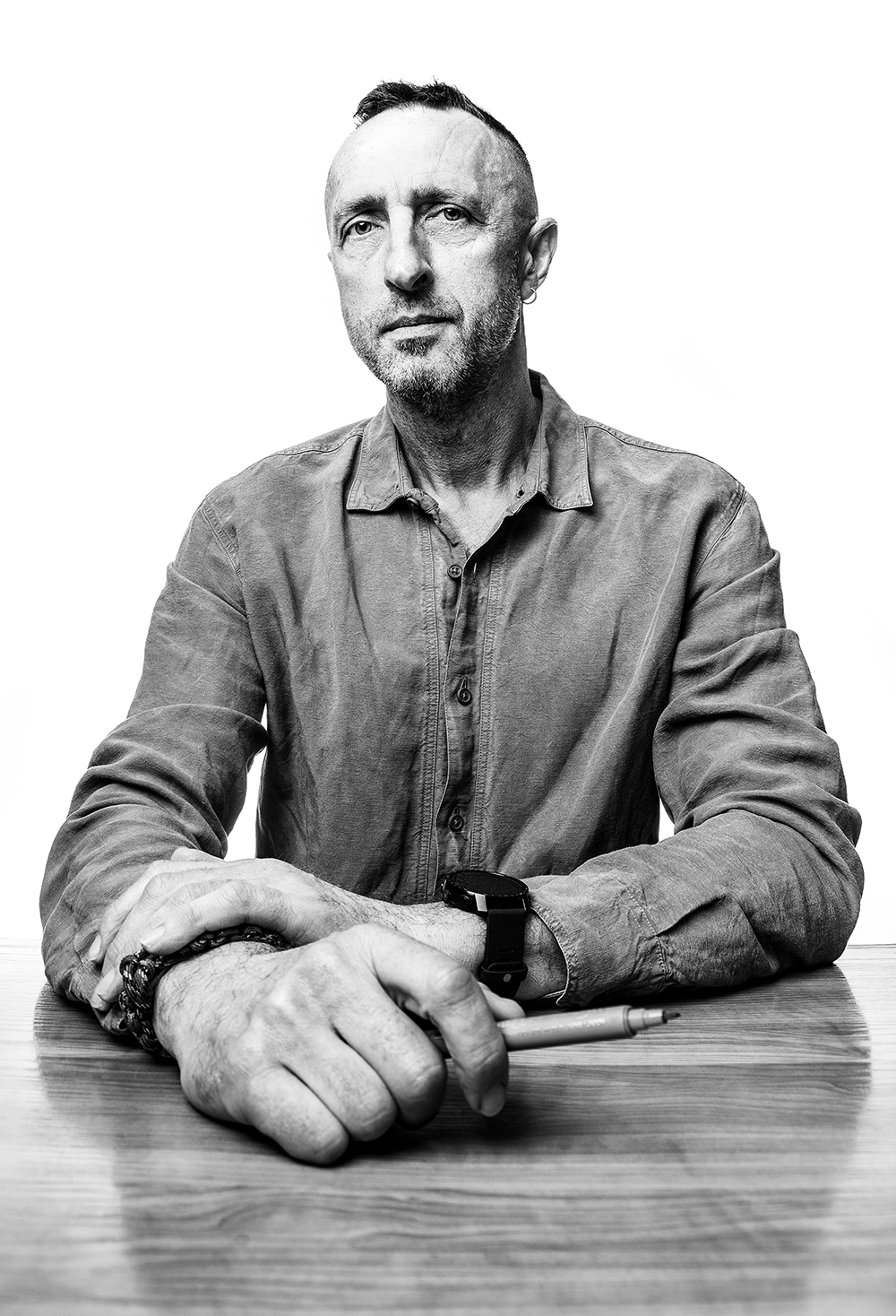
Led since by Amondó Szegi, Fontanatype has spent over 25 years building typefaces that carry history without being trapped by it. Its work spans the full range of type practice: historically informed text families, display and experimental designs, and typefaces developed for editorial, cultural, and identity projects worldwide.
The foundry’s back catalogue includes typefaces distributed through T-26, P22/IHOF, and The Type Foundry — among them designs that became quite classics: Telegdi, Mantra, Nexodus, and others. These remain part of the Fontanatype identity, alongside newer and more experimental work that continues to test the boundaries of what a typeface can be. Sorry — an experimental typeface that became the creative spark behind Blendraw, a drawing and skill-development app created with Imre Szögi, which also had a physical tablet version — is one example of how Fontanatype’s work extends beyond the world of type.
Amondó teaches type design at the Moholy-Nagy University of Art and Design (MOME) and KREA Design School in Budapest. That connection to education runs through everything: the belief that letters deserve to be understood, not just used.
The foundry’s name and logo carry their own story — a deliberate nod to Marcel Duchamp and the appropriation of the everyday. [Read more →]
Fontanatype releases are distributed on MyFonts under two labels: MONOVO — the foundry’s contemporary, conceptual line — and Fontanatype, home to its broader catalogue of classics, experimental work, and new releases.